
Search Wisconsin Police Records
Wisconsin Police Records can come from a sheriff, police department, circuit court, the Wisconsin Department of Transportation, or the Wisconsin Department of Justice. The right place depends on what you need. Some searches start with an online portal. Others require an email, mailed form, or in-person request to the local records custodian. This page pulls together the main statewide channels, the public records rules that shape access, and the county and city pages where you can narrow your search for a crash report, incident report, jail record, warrant detail, or court-linked police record in Wisconsin.
Wisconsin Police Records Overview
Where Wisconsin Police Records Start
Wisconsin Police Records are not housed in one office. That matters. A city police department may hold the first incident report, body camera response, or local accident file. A county sheriff may hold the jail booking record, call log, warrant list, inmate information, or open records response. Court-linked case details then move through WCCA, which copies public data entered by circuit court staff. For appeals, the next stop is WSCCA. Each layer serves a different part of the record trail.
The state also runs its own systems. The Wisconsin Department of Justice Crime Information Bureau uses WORCS for statewide criminal history record checks. The Wisconsin Department of Transportation uses Crash Reports for crash report sales and MV2896 procedures for driver and vehicle records. The Wisconsin State Patrol handles many statewide law-enforcement requests through its own open records process. When you know which agency created the record, the search gets faster.
Note: Wisconsin Police Records are usually split by the agency that created them, so matching the record type to the custodian saves time.
How To Search Wisconsin Police Records
Start with the easiest public source. If you need court-linked police records, use WCCA first. It is free, covers all 72 counties, and shows case numbers, dates, party names, charges, and dispositions. The site copies court system data hourly unless maintenance is underway. It is not the official judgment and lien docket, but it is often the fastest way to confirm the county, case number, and filing pattern before you ask for a local report, booking file, or court document.
If you need a criminal history record check rather than a case summary, use WORCS. That system lets a requester submit an online criminal history search, pay the state fee, and pull the result after processing. Results remain available for six months. If the status sits in queue, the research notes say it can take from a few minutes up to a day or two when traffic is heavy. That is a very different tool from WCCA, so it helps to know whether you are after a statewide criminal history response or a local police report.
When the record is tied to a crash, go to crashreports.wi.gov. The portal searches by crash date and other identifiers, then delivers a PDF once payment clears. The state says reports can take ten business days or more to appear after the investigating agency completes and sends the file. Some reports show in the search but are not available for direct online sale, which means the page will route you to follow-up instructions. That extra step is normal for some Wisconsin Police Records.
Use this order when you do not know where to begin:
- Check WCCA for case numbers and public court summaries.
- Use the county or city page on this site to find the local sheriff or police records contact.
- Use Crash Reports for official Wisconsin crash files.
- Use WORCS for statewide criminal history checks.
- Use WSCCA if the matter is already on appeal.
Wisconsin Police Records Request Rules
Wisconsin public access starts from a strong disclosure policy. Wis. Stat. § 19.31 says people are entitled to the greatest possible information regarding the affairs of government. That policy reaches police files too. In practice, that means incident reports, arrest records, booking details, and many related records are presumed open unless a statute, a court decision, or the balancing test supports withholding part of the record.
Wis. Stat. § 19.35 governs the working side of a request. A requester has a right to inspect or receive copies of an existing record, but an agency does not have to create a new record or compile a new report just because someone asks. That point matters with Wisconsin Police Records. If a sheriff keeps separate incident, audio, and video files, the office can release what exists while declining to build a new spreadsheet or custom summary for you.
Wis. Stat. § 19.36 explains many of the limits. Agencies may redact portions made confidential by state or federal law. They may withhold protected investigative information. They also must separate open information from closed information rather than deny an entire record when only part is exempt. For a police records requester, that usually means names, dates, narrative fragments, or agency actions may be released even when some details about victims, juveniles, informants, or active investigative steps are removed.
The Wisconsin Department of Justice Office of Open Government keeps a compliance guide at its open government resource page. That guide walks through record existence, statutory access, prohibitions, and the balancing test. It is a useful state source when a local denial letter sounds broad, vague, or incomplete. It will not force a release by itself, but it explains the framework local custodians use when deciding how much of a police file can be opened.
Note: Wisconsin Police Records law favors release of existing records, but not the creation of new records, and it allows targeted redaction when only part of a file is closed.
Types Of Wisconsin Police Records
Wisconsin Police Records cover more than one kind of file. Local departments may hold incident reports, offense reports, arrest paperwork, booking logs, jail records, call logs, dispatch-linked materials, warrant lists, inmate roster details, and crash files. Courts then hold complaints, docket activity, hearing dates, orders, and dispositions. State agencies add their own layers through criminal history checks, driver record requests, crash systems, and correctional lookup tools.
That split is why similar searches can lead to different places. A crash in one county might start with the local sheriff, move to the state crash portal, and end with a case lookup in WCCA. A warrant-related search may involve a sheriff warrant list, a circuit court case, and an appellate history on WSCCA. A jail inquiry may call for county custody records rather than a statewide Department of Corrections search, since the DOC offender locator does not cover county jail populations.
Common Wisconsin Police Records include:
- Incident and offense reports from local police and sheriffs
- Arrest and booking records tied to county jail intake
- Crash reports and self-reported crash filings
- Warrant, inmate, and jail roster information where published
- Court case summaries, filings, and appeal activity
State Agencies For Wisconsin Police Records
The Wisconsin Department of Transportation gives two different records paths. The main crash report purchase system is crashreports.wi.gov. The broader driver and vehicle record request channel is outlined on the MV2896 request page. That page explains online requests for your own driving record, mail requests for someone else’s record, the difference between certified and non-certified copies, and the state mailing address for request forms and payment. Those are transportation records, but they often connect back to local police records after a traffic stop or crash.
For state patrol files, the Wisconsin State Patrol says its record coordinators handle more than 15,000 requests each year through the open records page. The agency notes that response times vary by post, many requests take four to six weeks, audio and video can take longer, and ongoing investigations may block release. The research also gives regional post contacts. That matters when a county search points to a State Patrol response rather than a sheriff report.
The Wisconsin Department of Corrections adds another public layer through the Offender Locator and the sex offender law framework in Wis. Stat. § 301.45. Those tools can help when your search moves beyond an arrest report and into custody status or registry information. They are not substitutes for local police records. Still, they often help confirm names, locations, and system history before you send a request to a county or city custodian.
Wisconsin Police Records Fees And Timing
Fees and timing change by agency. The state research gives several anchors. WORCS charges $7 per online criminal history check. Crash reports become available after the reporting agency completes and submits them, which can take ten business days or more. WisDOT says record requests must reasonably describe the records sought and that it may charge the actual, necessary, and direct cost of locating, reproducing, and mailing records. If a search cost exceeds $50, the department may charge that location cost. The department can also require prepayment when estimated fees exceed $5.
Local police records requests work much the same way. A county sheriff or city police department may quote per-page copy costs, actual media reproduction costs, mailing costs, and sometimes location charges when a file takes substantial staff time to find. Wisconsin law does not force an agency to answer right away, but it does require a response as soon as practicable and without delay. In plain terms, a simple report may move fast while body camera, jail video, or a heavily redacted investigative file may take longer.
If your request involves audio, video, or a broad date range, be precise. Narrow requests usually move better. Give names, dates, case numbers, crash dates, addresses, or booking details when you have them. That reduces delay and lowers the chance that an office will say the request is too vague. It also helps avoid unnecessary search fees, especially with Wisconsin Police Records that sit across more than one division or storage system.
Wisconsin Police Records Portals
The Wisconsin DOJ WORCS portal is one of the main statewide starting points for Wisconsin Police Records tied to criminal history searches.
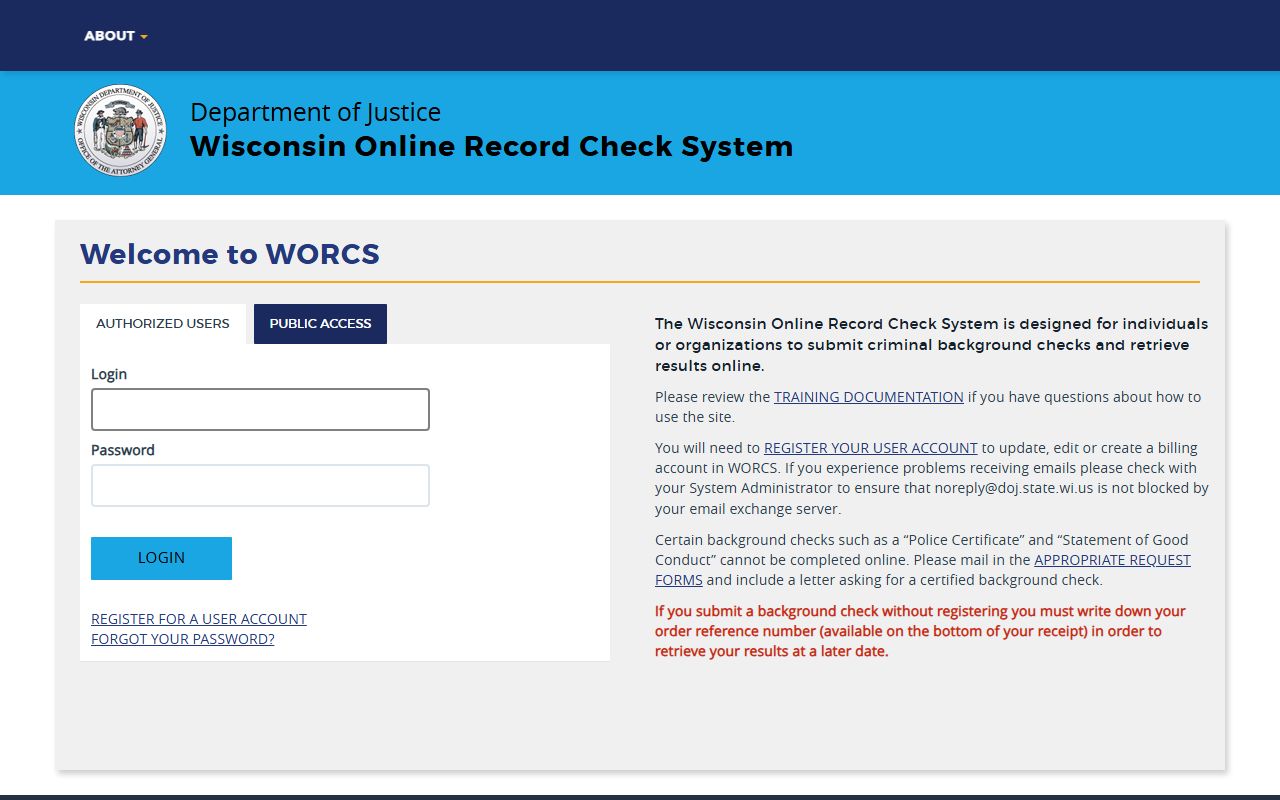
This portal is best for statewide criminal history checks rather than local incident narratives or jail records.
The WCCA public court search helps users connect police activity to public circuit court cases across Wisconsin.
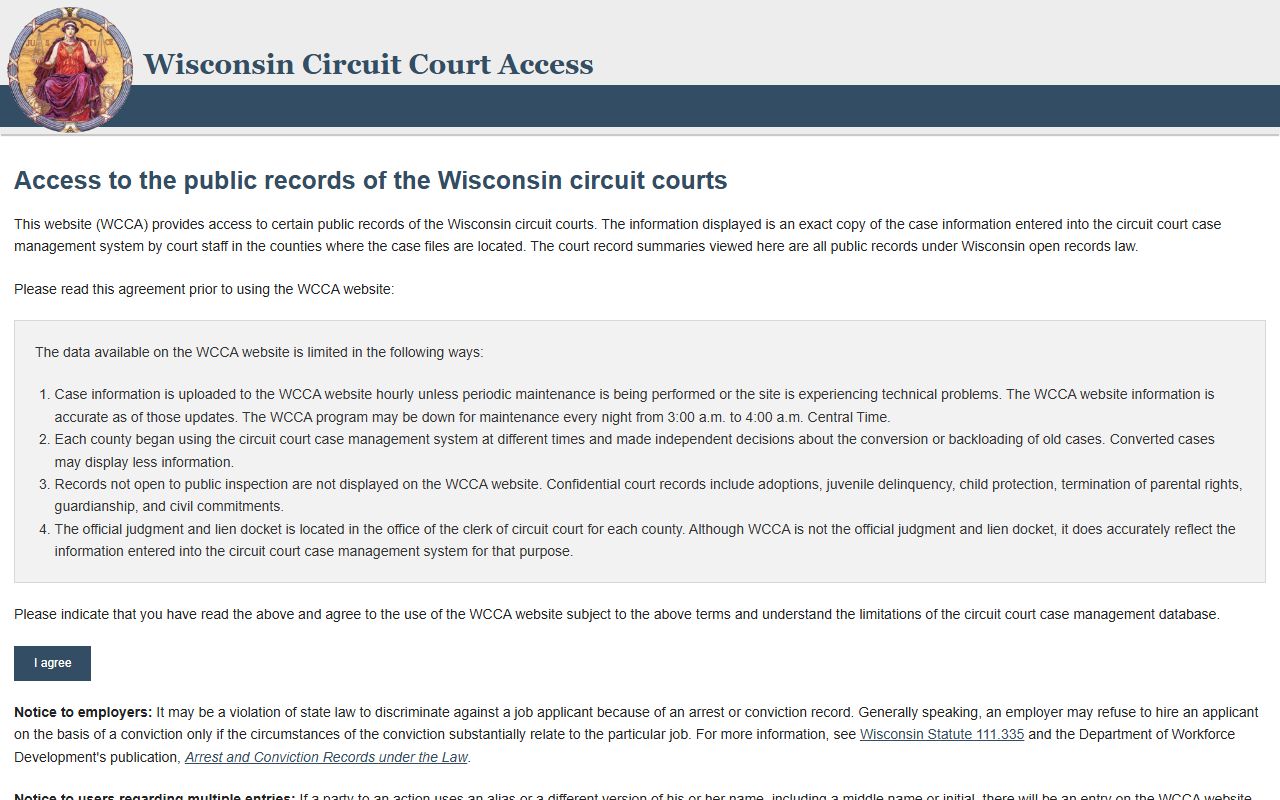
It is often the fastest way to confirm a case number, filing county, and public case status before asking for local police files.
The WSCCA appeals portal extends Wisconsin Police Records research when a case moves into the appellate courts.
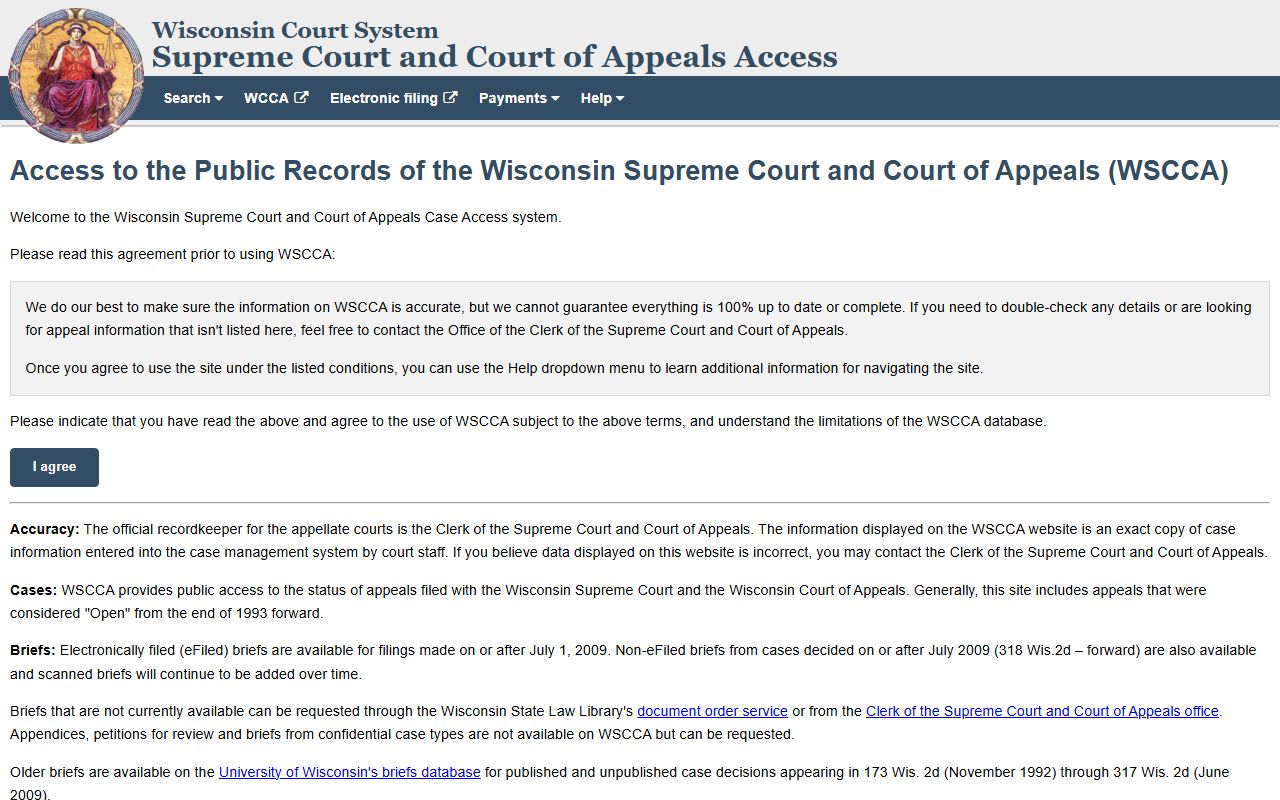
That extra layer is useful when an arrest or prosecution led to a later appeal rather than stopping in circuit court.
The Wisconsin crash report sales portal is the standard state channel for buying official crash files.
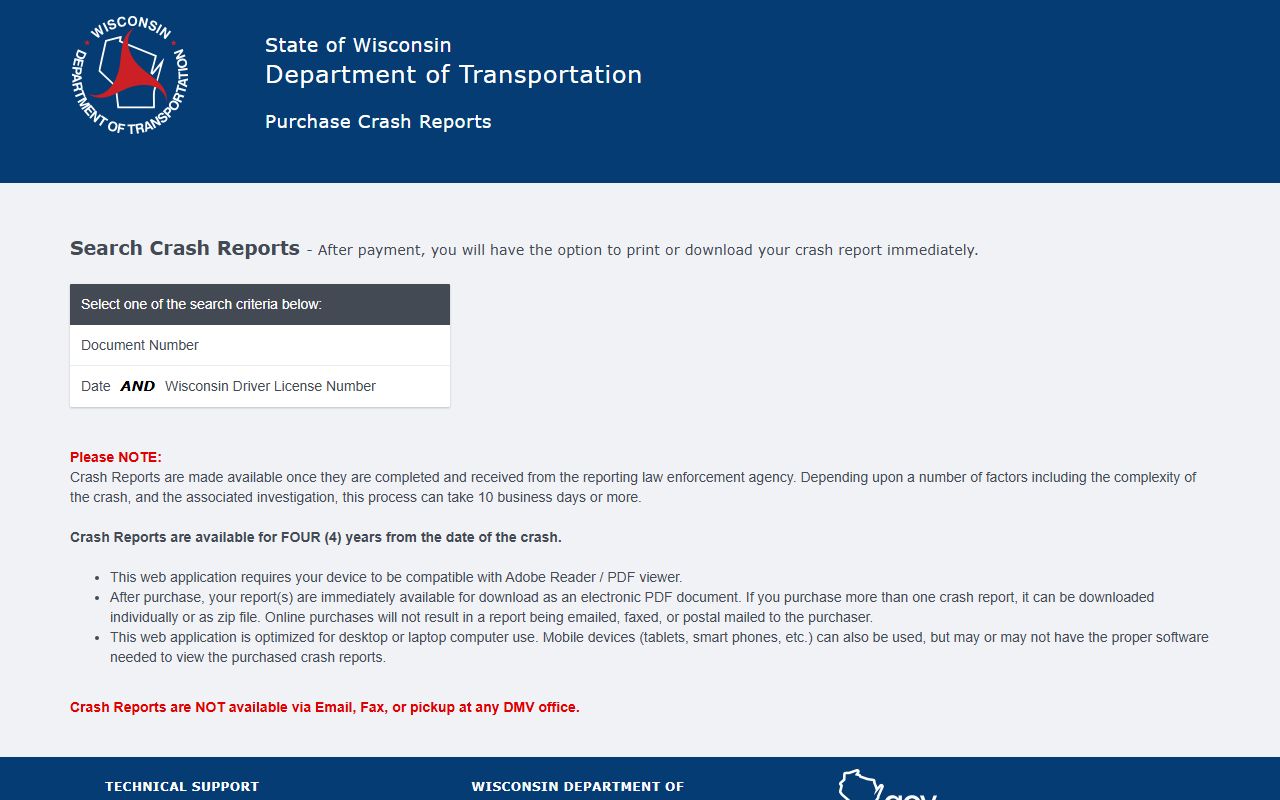
Crash reports often take time to post, but this remains the main statewide source once a report is processed.
The WisDOT crash reporting page explains when drivers must complete a report and what details are needed.
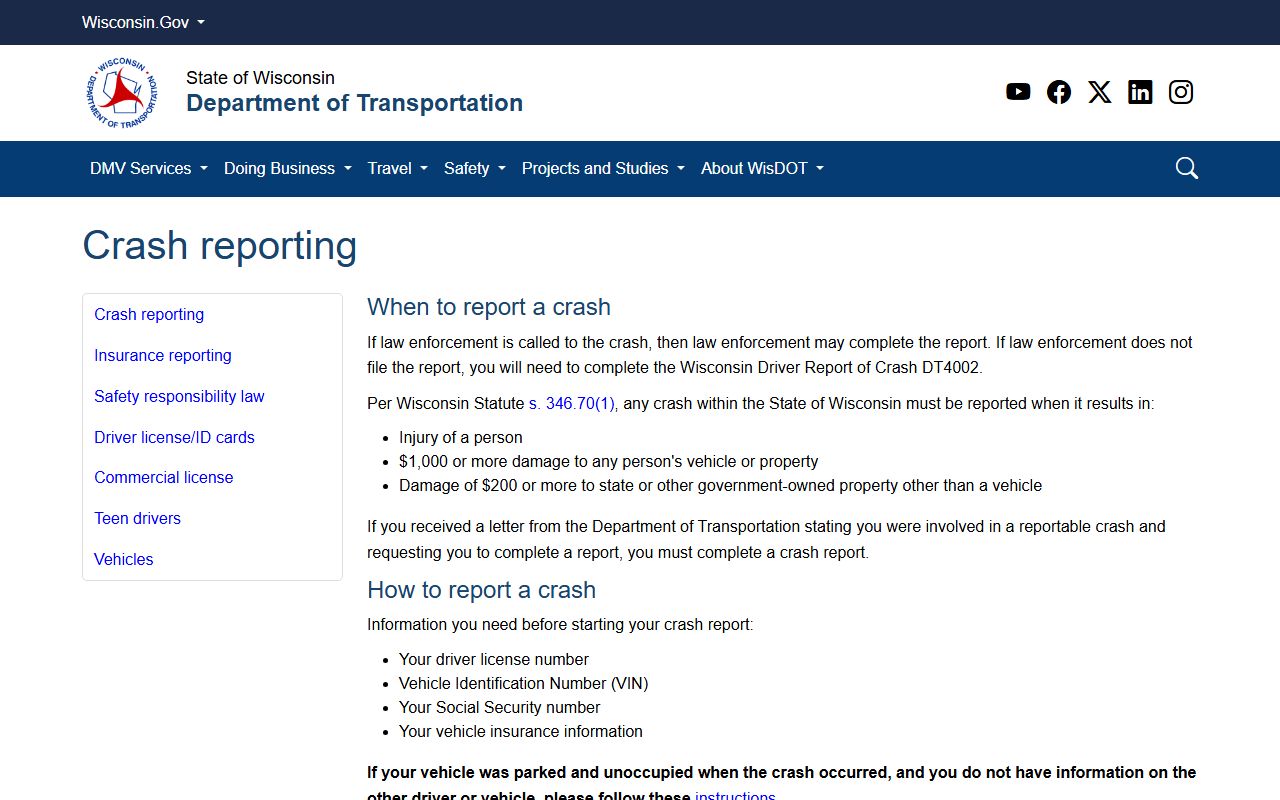
That guidance matters when law enforcement did not file the report and the state still requires a crash submission.
The WisDOT record request page covers certified and non-certified driver record access.
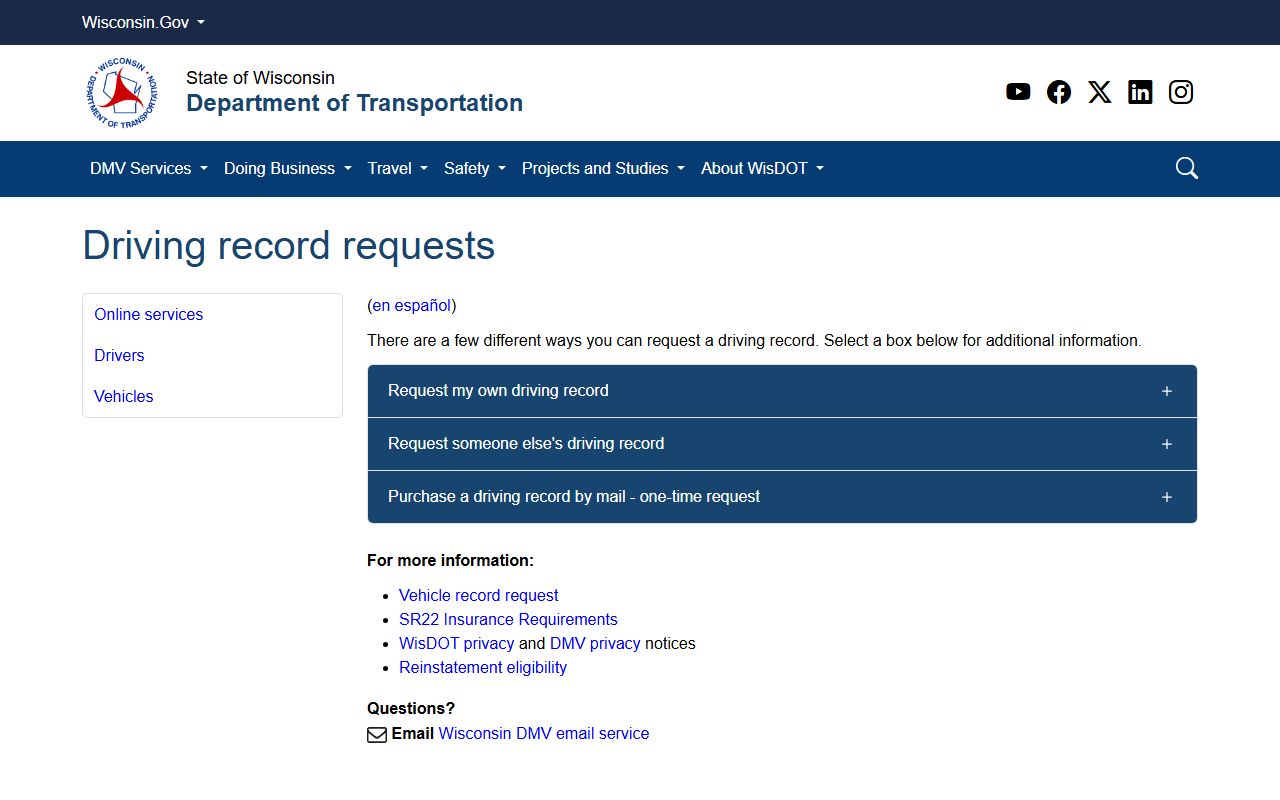
It is separate from local police files, but it often supports traffic and crash-related research.
The WisDOT open records page lays out how the department handles public records requests.
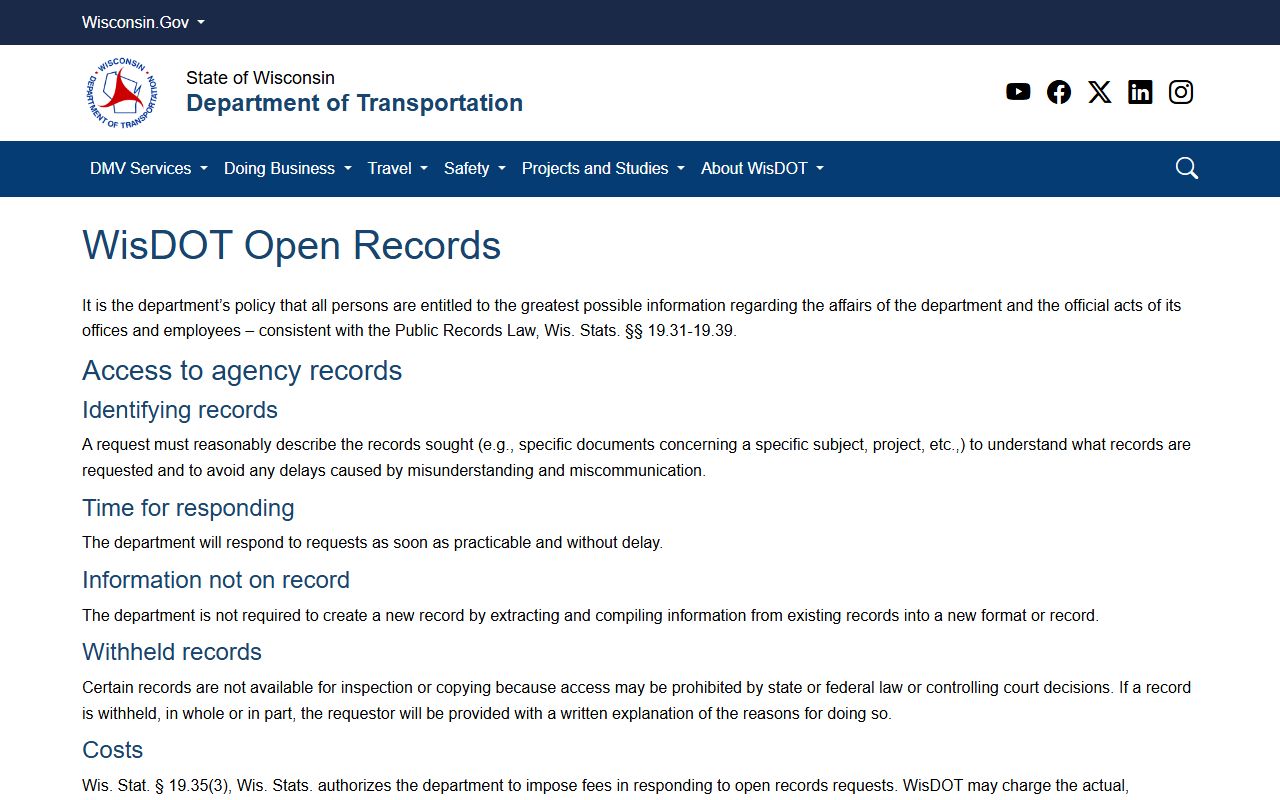
It explains direct and necessary costs, prepayment rules, and the need to describe records with enough detail.
The Wisconsin State Patrol open records page is the right route for patrol-created reports, audio, and video.
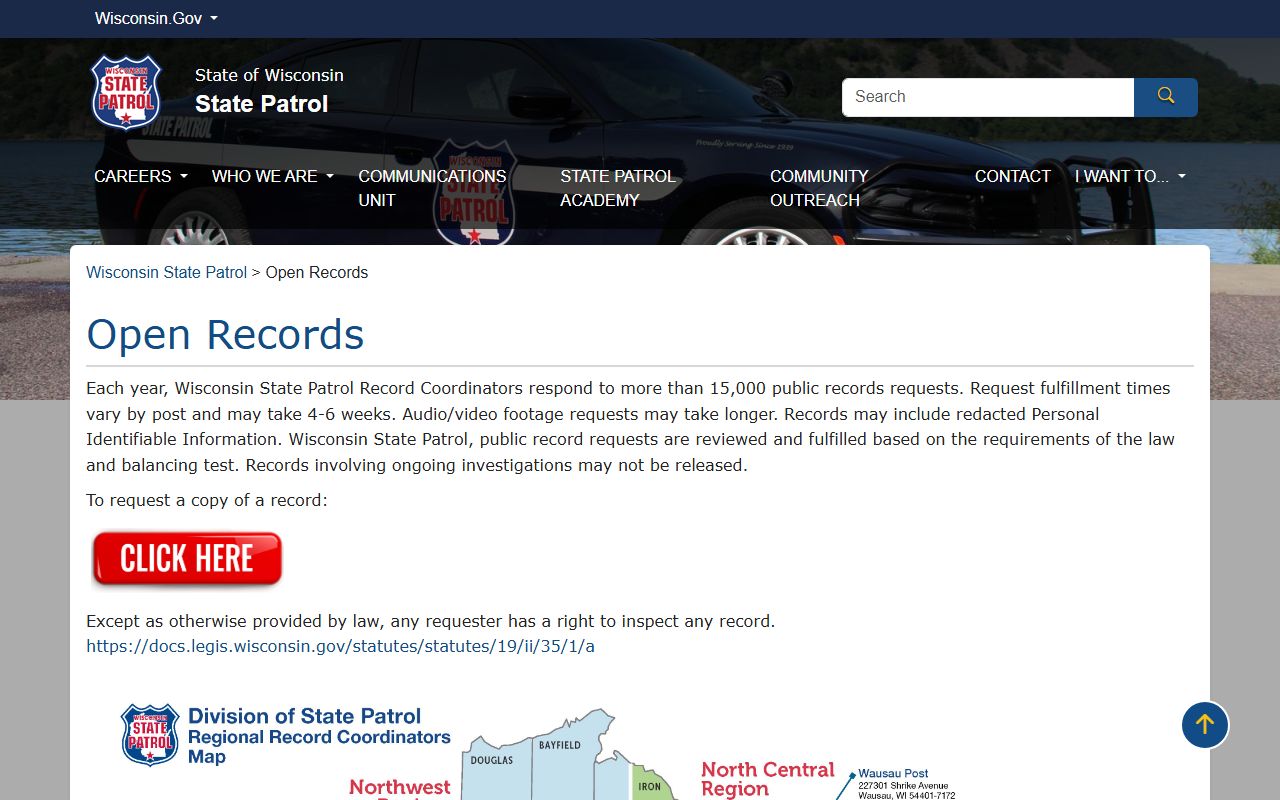
State Patrol requests can take weeks, especially when footage or redaction work is involved.
The older DOC public offender lookup shows how statewide custody research has been made available to the public.
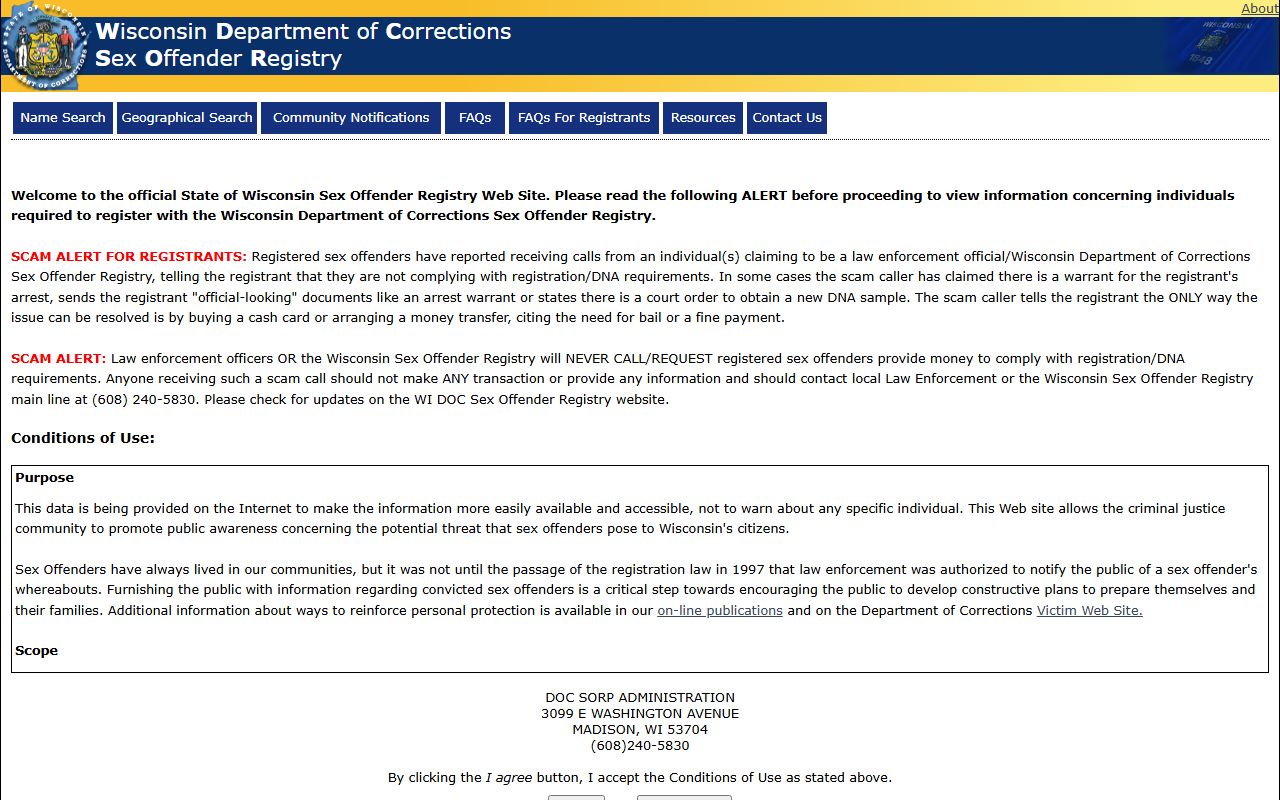
It is useful as context, though the current offender locator is the stronger state-facing tool.
The DOC Offender Locator helps confirm state custody and supervision details tied to a person in Wisconsin.
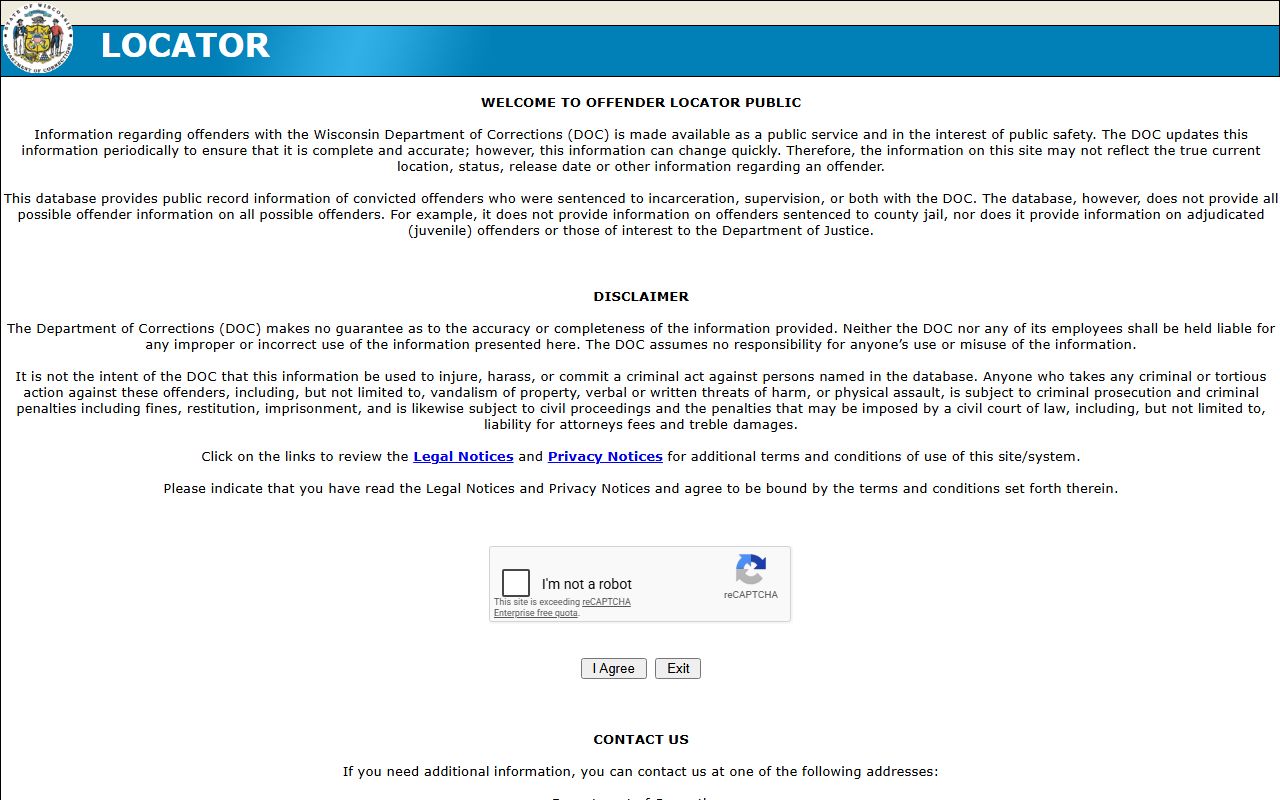
It does not replace county jail records, but it can help distinguish state supervision from local detention.
The DOJ open government resource page gives requesters a deeper guide to Wisconsin public records law.
It is a strong reference point when you need to understand redactions, denials, or the balancing test.
Wis. Stat. § 19.31 sets the broad public policy that supports access to Wisconsin Police Records.
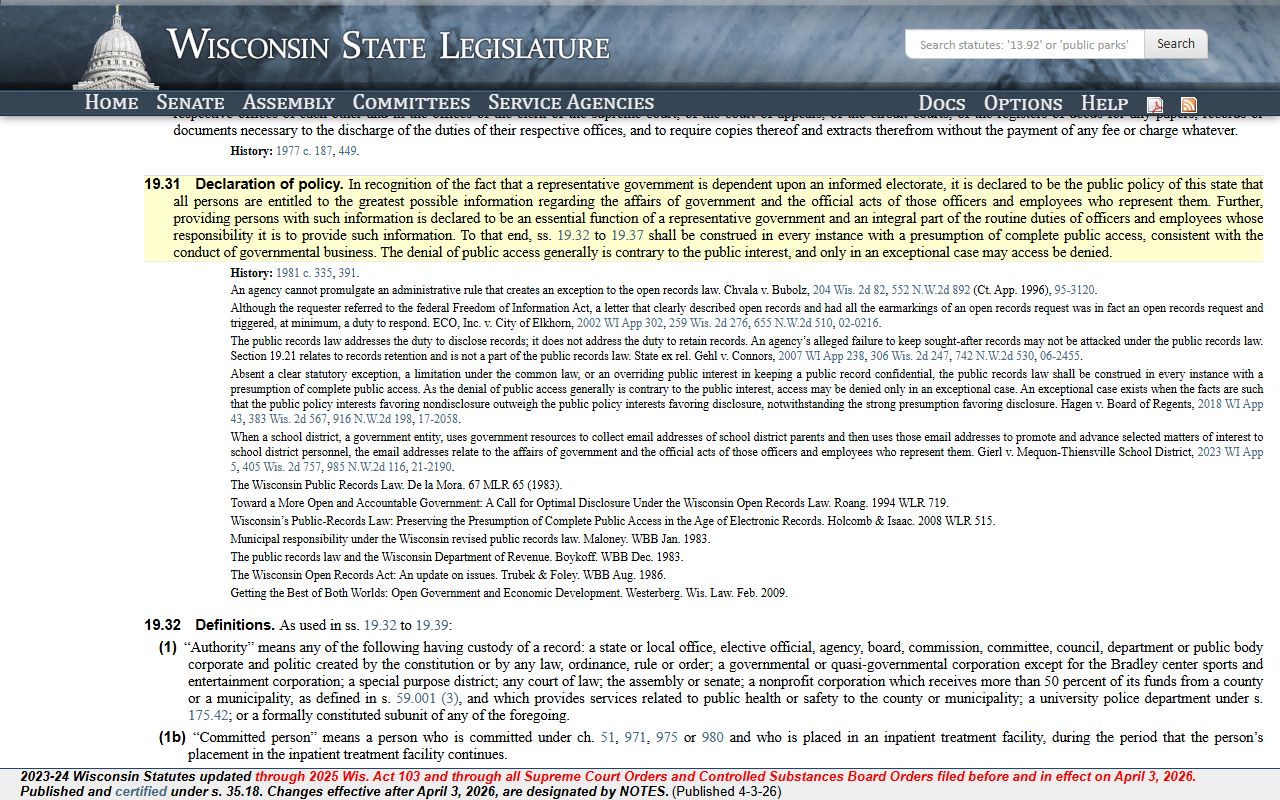
That policy language is the starting point for most public records analysis in the state.
Wis. Stat. § 19.35 covers operational access rights, inspection, copies, and many fee rules.
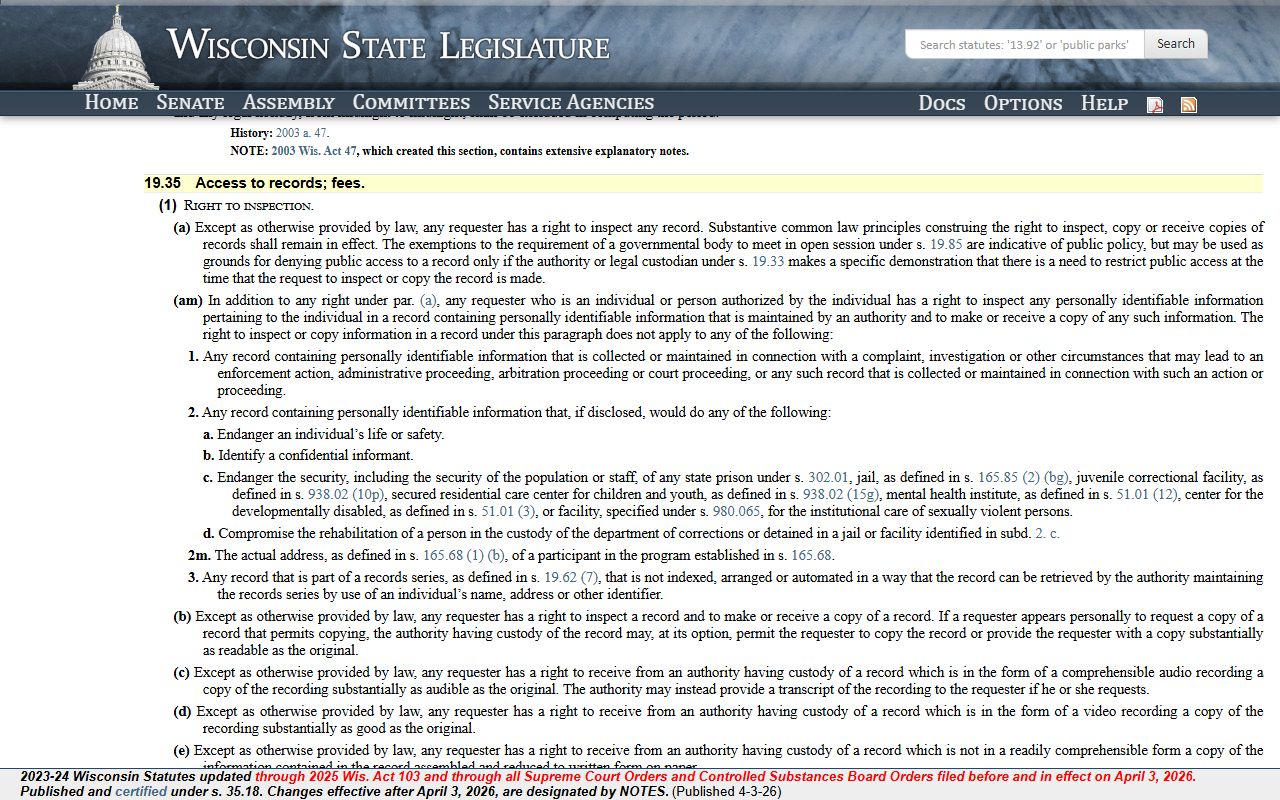
This is the statute most requesters run into when an agency explains fees, scope, or inspection rights.
Wis. Stat. § 19.36 explains several limits and the need to separate open and closed information.
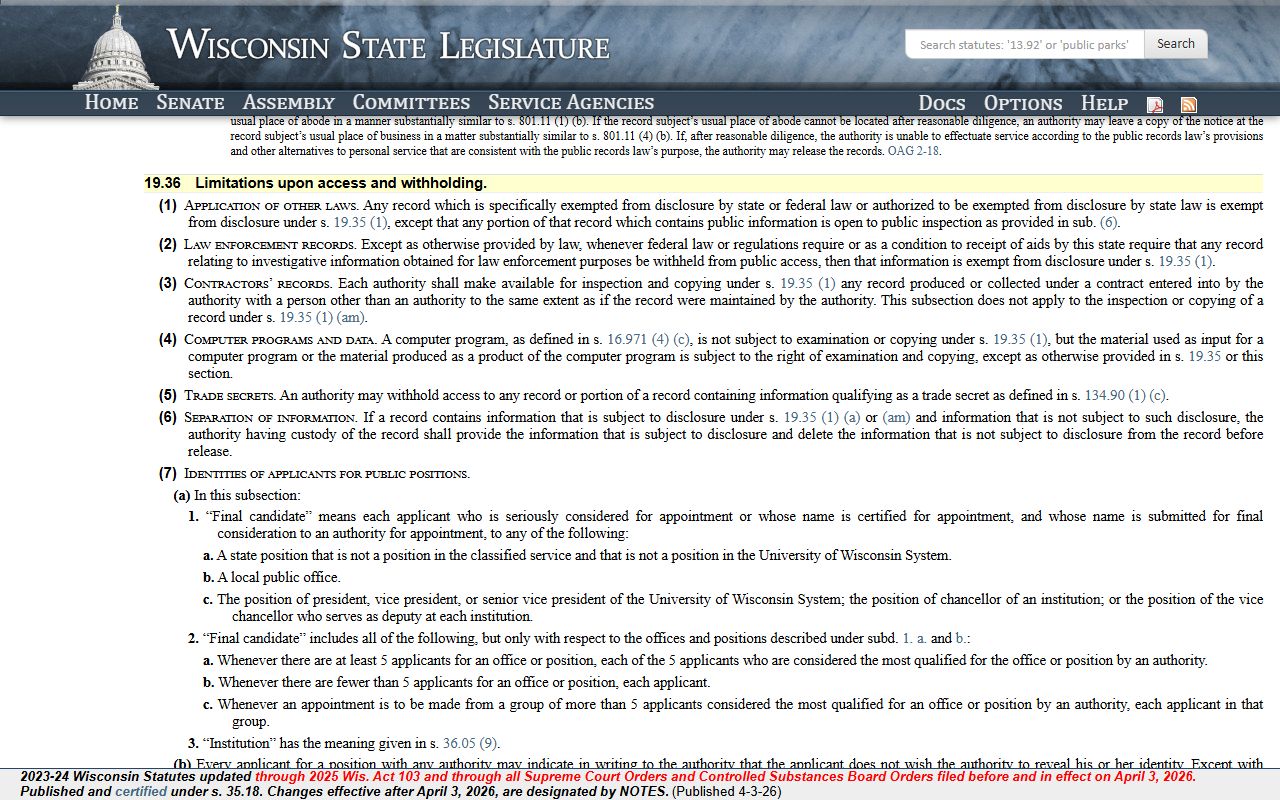
It is central when agencies redact investigative details while still releasing the rest of the file.
The Wisconsin State Public Defender site helps explain how criminal cases move through the justice system after arrest and charging.
It is not a police records portal, but it adds useful context when a records search turns into a case-status search.
Browse Wisconsin Police Records By County
Each county page on this site narrows Wisconsin Police Records down to the sheriff, jail, crash, court, and local request channels used in that county.
Wisconsin Police Records In Major Cities
City pages point users toward the local police department, the county court system behind the city, and any city-specific records procedures found in the research.