
Search Marathon County Police Records
Marathon County Police Records are easiest to track when you begin with the office that created or keeps the file. In Marathon County, that usually means the sheriff office, the county public records portal, the clerk of courts, or the jail division. Each office holds a different piece of the story. A report may start with a deputy, move to the courthouse, and end up in the jail roster or a state case lookup. If you follow the record in that order, you spend less time guessing and more time finding the right county file.
Marathon County Police Records Requests
The county public records page is the main formal entry point for Marathon County Police Records. It sits inside the county contact structure and tells requesters to use the public records portal when they want records from a county department. The sheriff office page supports that path by showing how the office is organized, where it sits in the courthouse at 500 Forest Street in Wausau, and how the public can reach the office at 715-261-1200. That matters because a good records request is not just about the right topic. It is also about sending the request to the office that actually keeps the file.
The sheriff office page also shows that Marathon County Police Records are handled inside a broader law enforcement structure with five divisions: administration, communications, corrections, investigations, and patrol. That structure helps you narrow the request before you submit it. A patrol matter is not the same as a jail question. A records request tied to an investigation is not the same as a general public contact request. The more precise the request, the easier it is for the county to identify the responsive record and move it through the right channel.
Use a direct request when you know the basics. The county public records portal works best when you include the kind of detail the office can search on.
- Name of the person or case involved
- Date or date range of the event
- Location where it happened
- Type of record you want
- Case number or report number, if known
Marathon County Police Records often move across office lines. A report can start with the sheriff office, then connect to clerk of courts material, then point to custody or jail information. The county public records page gives you the administrative route, while the sheriff office gives you the custodial office name and address. That combination is what makes the Marathon County search practical.
Marathon County Police Records and Courts
Many Marathon County Police Records become court records after an arrest, citation, or complaint is filed. The clerk of courts page says that the office is responsible for filing and case management for all Marathon County court cases, along with fines, forfeitures, fees, and related court work. That makes the clerk the right place to check when the report has moved from law enforcement into a formal case. If you are not sure whether that happened, WCCA can give you a quick public answer before you ask for copies or a deeper search.
Wisconsin Circuit Court Access is the cleanest statewide companion to Marathon County Police Records. It lets you search public case summaries by party name, case number, or business name and see whether a police matter turned into a criminal, traffic, civil, or family case. The portal is useful because it shows the court side of the file while the county pages show the local custody and request side. Used together, they save time and make it easier to tell whether the record you want is still with the sheriff office or already in the court system.
The Marathon County law library directory also maps the office relationships that matter in a records search. It points to the clerk of courts, sheriff, district attorney, and victim services, which helps explain why one incident may create several separate records. For Marathon County Police Records, that is useful because it keeps you from expecting one office to hold every part of the file.
Marathon County Police Records and Jail Status
The corrections division is the home base for jail questions in Marathon County Police Records searches. The county says the division is responsible for the Marathon County Jail and the juvenile detention facility. The jail sits inside the Marathon County Courthouse at 500 Forest Street in Wausau, while the juvenile detention facility is at 7015 Packer Drive in Wausau. That split matters when you are trying to match a name to a booking, a housing location, or a recent custody change. The jail page also confirms that the county houses people from other Wisconsin and U.S. law enforcement agencies, so a booking in Marathon County does not always mean the case began there.
If your Marathon County Police Records search is really a custody check, the jail side of the file is the fastest lane. The county says the jail has 279 beds and the juvenile facility can house up to 20 children ages 10 through 17. It also states the current housing cost is $500 per day, with a contracted rate of $250 per day. Those details are not the center of most public records searches, but they do show that the corrections division is a major county operation, not a small side office. That helps explain why jail questions often need their own routing path.
The sheriff office page and the corrections page work together here. One page shows the larger law enforcement structure, and the other shows where custody records live. If you need booking status, inmate housing, or the jail roster, start with the corrections division rather than trying to force the request through a general public records form. That keeps Marathon County Police Records searches aligned with the office that actually has the answer.
Marathon County Police Records Images
The Marathon County Sheriff request portal at Marathon County records request portal is a vendor front end, so it works best as a routing clue for Marathon County Police Records rather than as a source of policy details.
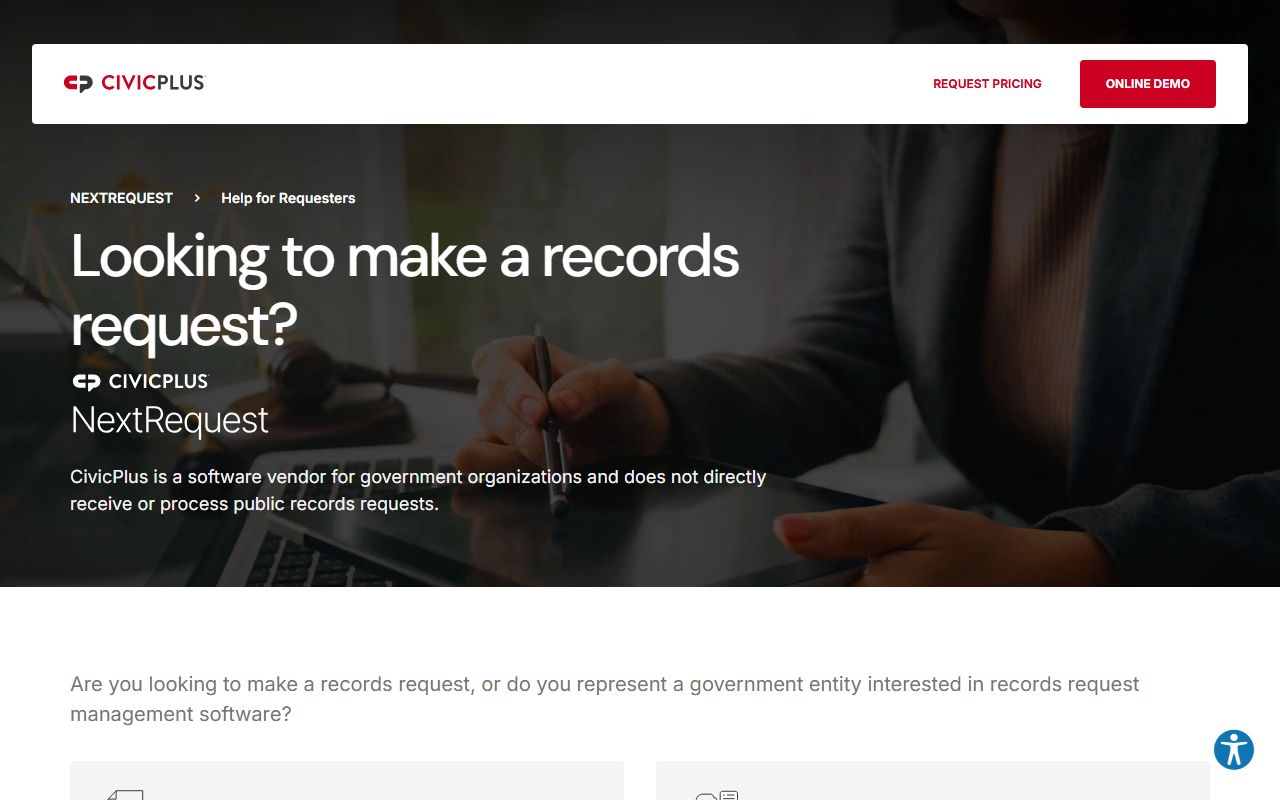
That image helps show where county request traffic is being directed while you keep the real records search tied to the sheriff office, clerk, and corrections division.
Marathon County Sources
The strongest local starting points are the Marathon County Sheriff's Office page and the Marathon County Public Records page. Together they show the sheriff office structure, the courthouse address, and the county's formal request path. If you are trying to understand where a report lives, those two pages usually tell you more than a generic search result ever will.
The Marathon County Clerk of Courts page is the next official stop when a police matter becomes a court case. It covers filing and case management work and makes clear that court records are handled separately from sheriff records. For public case checking, WCCA is the statewide companion source. For identity and criminal history checks, the Wisconsin DOJ background checks page is the state-level fallback.
WILENET can also help verify law enforcement contacts across Wisconsin. It is not a substitute for the county office, but it is a reliable state directory when you need to confirm names and agency details tied to Marathon County Police Records.
Marathon County Police Records Help
If your question is about a report, start with the sheriff office and the county public records portal. If your question is about a court outcome, move to the clerk of courts and WCCA. If your question is about booking or custody, use the corrections division and jail information first. That simple split keeps Marathon County Police Records searches from slowing down while you sort out the wrong office.
Marathon County is set up in layers on purpose. The sheriff office handles law enforcement functions, the clerk handles court filings and case management, and the corrections division handles jail operations. Once you know which layer owns the record, the search gets much easier. If you still need a statewide backup, the DOJ background check system and WILENET can confirm the broader law enforcement picture without replacing the county file itself.